What Is a Theme 7th Grade Language Arts Vocabulary Words and Definitions
When students in Becca Morris'southward form first listening to R.J. Palacio'southward Wonder, she looks frontwards to the discussion information technology will inspire, with questions like What does it mean to be a truthful friend?What's the role of the bystander in bullying situations? and Can we tell what a person is like just by looking at them? anchoring the conversation. Information technology is conversations like these that facilitate teaching theme in language arts. And the answers can plough reading a book into a life-irresolute experience for young learners.
"Studying themes like trust, integrity, and honesty," says Rachel Claff, editorial manager for the Great Books Foundation, "builds thoughtful world citizens and friends, the kinds of thinkers yous want to take in your classroom."
Each time students read, they're entering into a conversation with the author about what matters, says Jeffrey Wilhelm, distinguished professor at Boise Country University and writer of Fresh Takes on Education Literary Elements. At the core of that conversation, even so, is comprehension. To fully explore theme, students must sympathize what they read and then excerpt ideas from the text. "Y'all can't think with ideas unless yous understand them," says Wilhelm.
Here are 14 tips to help your students understand theme equally they read.
1. See your students where they are.
Plan reading and discussion around questions that your students are already grappling with, from What does it mean to be a expert friend? to What is heroism?
When you connect your literature themes to character development and what's going on in students' lives, your discussions will hopefully resonate deeply with them. One goal with teaching theme, explains Jodi Libretti of the Great Books Foundation, is to encourage students "not only to think about means that they can live, but the blazon of person they want to become."
2. Start with concrete details.
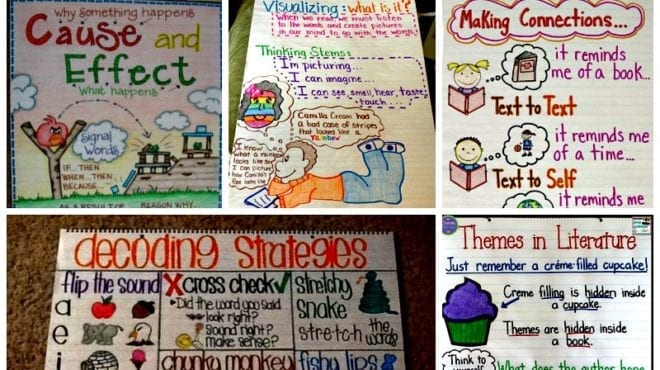
Before they tin identify and work with the theme of a story, your students demand to accept a strong grasp of the details: setting, character, plot. When they work with theme, they have to synthesize all that information into an overarching bulletin. Use anchor charts to outline the elements of the story or give students a graphic organizer to follow.
3. Clarify the difference between theme and main idea.
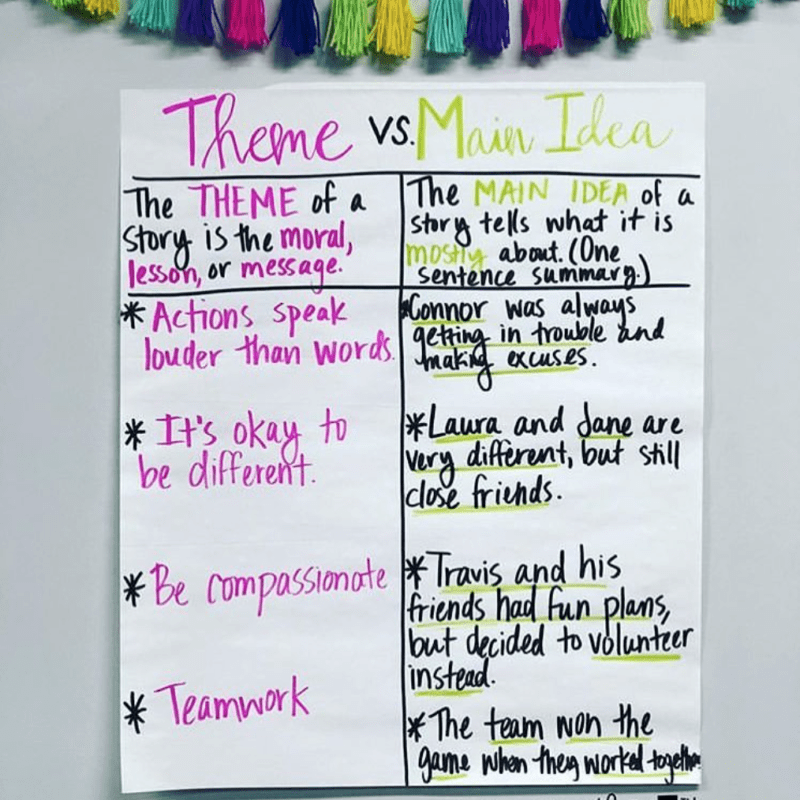
Source: Mrs. Smith in 5th
Many students have difficulty differentiating between the chief idea and the theme. The theme is the underlying bulletin that the author wants to convey, whereas the main idea is what the story is mostly about. Teach these concepts separately and together. You might exercise identifying themes and primary ideas using Disney films or the stories your students read last year in order to take a common reference point. Later you review as a class, give students a listing of themes and master ideas and claiming them to work in pairs to create matches.
four. Scaffold the learning.

Theme is a difficult concept to grasp. Dissimilar the concreteness of setting or plot, theme is subtle and subjective. Movement from simpler to more complex form assignments to help your students deepen their understanding. Humanities teachers Sara Kaviar and Megan O'Keefe, of the Wildwood School in Los Angeles, invite their students to work in groups to identify the theme of a fairy tale. Next, they create different endings to the tale and work together to identify how the new ending affects the theme. Finally, students write their ain plots to lucifer a given theme. Sentinel a video of how they approach instruction theme here.
5. Use essential questions.
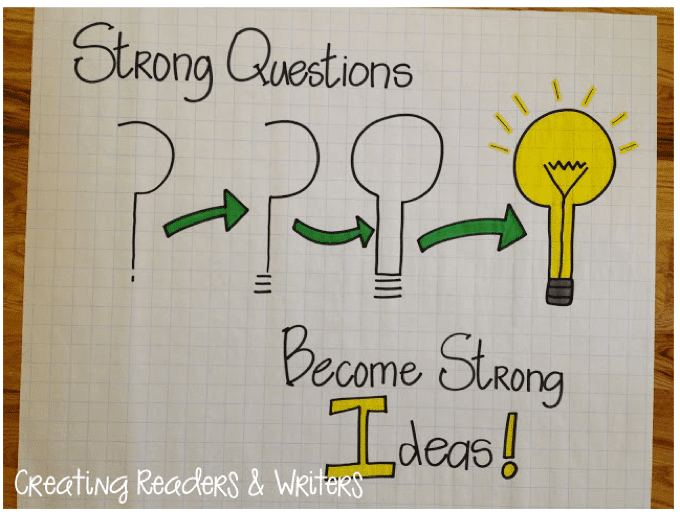
Source: Creating Readers & Writers
Essential questions are open-concluded, thought-provoking, and important in helping students develop their understanding of the theme. Questions like Why do people behave honestly? and What makes a good friend? are ones that you can return to throughout the yr to analyze how students answer. Meet how their answers alter equally you read different authors' takes on the subject.
6. Ask story-specific questions, also.
Specific, targeted questions help focus students on the text. "Asking 'what is the theme?' sometimes strands students because information technology's likewise general," says Claff. On the other mitt, asking questions that are more explicit, like "Where does friendship play an important part in this story?" tin be as well leading. Instead, ask questions that draw from the text and require show to support theme. For example, if you're readingTuck Everlasting, you might ask, "Should Winnie drinkable the immortality h2o?"
7. Approach theme from different directions.
Be prepare to phrase questions almost theme a few dissimilar ways considering you never know which question(south) will resonate with students. Some questions that volition encourage thinking most theme are: What did the writer want u.s.a. to recall near? What idea stays with you? andWhat will you remember nigh the story a twelvemonth from now?
8. Accept a range of answers.
Of course, for many texts, there are oftentimes multiple themes and more than one way to express them. Be flexible when accepting students' answers to theme-based questions. Students will often be grappling with concepts they tin't fully own. For example, if a educatee says the theme of Tuck Everlasting is living forever is a bad idea, y'all can work with the class to detect different ways to express this thought. You might say, "Okay, what are some other ways nosotros tin can say that?" Guide students toward the theme rather than requiring 1 right answer, which can plough the discussion into a game of guessing the teacher's thoughts.
9. Allow students to disagree with the theme.
Let students know that they don't have to concord with the theme, just because they read it! Showcase 2 opposing themes and have students hash out which ane they agree with more than. For example, y'all could take a paragraph with the theme of Y'all can e'er trust your friends and another paragraph with the theme of If you want something done correct, you accept to do it yourself.
10. Go away from the obvious.
It's like shooting fish in a barrel to tease out the theme from some stories (think: Aesop's The Pismire and the Grasshopper). Challenge students with stories that don't follow a typical pattern. For example, in the Great Books unit on honesty, students read about characters who begin each story by being quack. By starting with a character who's lying, students explore deeper issues of honesty from the start. The careful use of stories, says Claff, opens upwards problems for students in an interesting existent-world way.
11. Connect your discussions to other field of study areas.
Do you see examples in social studies or current events that connect to your theme? Starting time a collection or message board around your current literature theme. Students can add examples from pop culture, history, or other reading. Aid students connect the theme to their own lives by assigning take-dwelling house activities that build personal experiences around each theme. When students study kindness in Great Books, they perform a random act of kindness. And when tertiary graders study gratitude, they give an anonymous gift so they tin feel what it's like to not receive a thank-you.
12. Provide a range of reading options.
To engage students at varying reading levels, provide a choice of books on one theme. When teacher and author Laura Robb teaches about obstacles, she fills her classroom library with biographies so students can read about how different historical figures overcame challenges in their lives. Even when each pupil is reading something different, they are still engaging with the theme in conferences and writing. 1 fashion to introduce choice is to have a read-aloud ballast text for all students, with a multifariousness of stories to choose from for independent reading. In conferences, ask students to chronicle and connect their independent reading to the read aloud.
Teaching theme gets at the heart of what we want for students—accurate, meaningful, and memorable experiences with text. Jeff Wilhelm may accept put it best, "If you tin can read for theme, you tin participate in a democracy."
thirteen. Use mini lessons to bulldoze the point home.
These seven quick mini-lessons help for didactics theme and how authors and artists extract a big thought.
1. Assess inspirational quotes.
Read inspirational words to define a theme and brainstorm stories, movies, or existent-life events in which you run across this theme played out.
two. View compelling art.
Make art a springboard to discuss themes and how they're interpreted. For example, Edvard Munch's The Scream can inspire a discussion about the theme of fright and incertitude.
three. Listen to songs.
Songs tin can lend themselves to a give-and-take of how artists communicate larger messages through lyrics. For instance, Lee Ann Womack'south "I Hope You Dance" lends itself to a give-and-take of independence.
four. Pull out the oldies just goodies.
Fairy tales are quick hits in teaching theme—like pulling the theme of green-eyed from Snow White.
5. Review popular movies.
Brainstorm theme ideas from popular movies. For example, The King of beasts Male monarch and responsibility or Willy Wonka and the Chocolate Factory and greed.
6. Watch a Pixar short
Pixar shorts are easily found on YouTube. You can sentinel them as a course and so strop in on a theme discussion. Consider Piper, Partly Cloudy, and Lava.
7. Gauge some books past their cover.
Post the covers of books yous have read and ask students to talk over whether or not the theme is evident on the cover.
fourteen. Keep to appraise theme throughout the year.
Equally the year progresses, you lot'll want to know if education theme paid off and if students are able to identify theme independently. Here are eight suggestions for finding out if your students are getting it.
1. Use annotation.
Have students annotate a text with details, quotes, and other "golden lines" that highlight the theme. Save and print our free teacher and student infographic posters on annotation.
2. Monitor reader responses.
Writing responses to the essential questions from the start to finish of a unit will assist you see how students develop their ideas.
3. Map character growth.
Oftentimes theme comes from the way characters—usually the main character—changes and grows throughout the story. Have students create a growth nautical chart focused on i grapheme, that marks transitions in their development.
4. Compare the theme with that of other stories.
Connecting the theme from one story to another shows that students grasp the theme in a broad sense.
v. Cite show.
Ask your students to give concrete examples from the volume that demonstrate the theme. This can include quotes, summaries, or title headings, to name just a few.
6. Reflect.
Have students make a connection through writing and discussion on what the theme means to them personally and how their understanding of the theme has inverse based on their reading.
seven. Search for additional themes.
Many stories have more just one theme—sometimes, y'all just have to dig a little. Using a story that students are familiar with, have them place and support a theme that's different than the one y'all've already studied. For case, in the story Oliver Button, students may come up with themes of bullying, gender roles, and determination.
8. Listen for theme.
In reading conferences with students, train yourself to listen for specific details and examples well-nigh theme. The more students are understanding, the improve they'll be at answering questions like What does the author want you to remember?
What are your tips for educational activity theme? Come and share in our WeAreTeachers HELPLINE group on Facebook.
Plus, our favorite anchor charts for teaching reading comprehension.
Source: https://www.weareteachers.com/11-tips-for-teaching-about-theme-in-language-arts/
0 Response to "What Is a Theme 7th Grade Language Arts Vocabulary Words and Definitions"
Post a Comment